
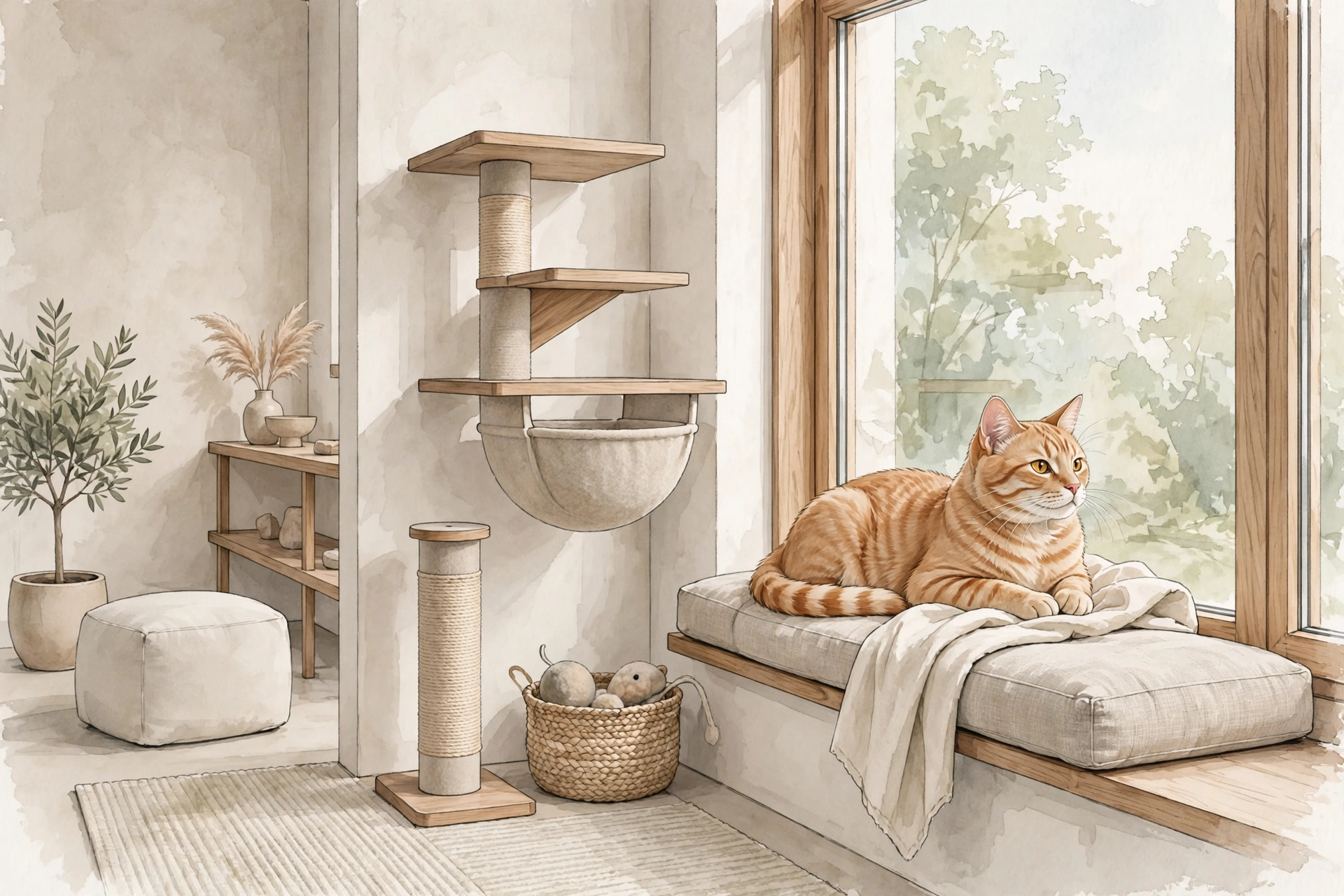
Think Vertically: The Third Dimension Matters
Cats don't just live in the square footage of your home; they live in the cubic footage. In the wild, cats climb trees to survey territory and rest safely.
Vertical Space Solutions
- Cat Trees: Essential furniture. Place near windows for viewing spots.
- Wall-Mounted Shelves: Create cat highways around rooms.
- Window Perches: Ultimate cat entertainment: bird TV.
- Top of Furniture: Clear space on bookshelves and cabinets.
Room-by-Room Cat Friendly Design
Living Room
Cat Tree: Near windows for bird watching.
Scratching Posts: Near sleeping areas.
Hiding Spots: Cat caves or boxes for retreating.
Kitchen
Food Station: Away from litter boxes.
Water Source: Multiple locations, consider fountains.
Safety First: Secure cabinets with cleaning supplies.
Bedroom
Sleeping Options: Beds at various heights.
Quiet Zone: Keep this area calm.
Night Comfort: Accommodate sleep preferences.
Bathroom
Litter Box: Quiet, accessible location.
Privacy Matters: Test covered vs. open preferences.
Safety: Secure all medications.
How to Cat-Proof Your Home: A Safety Checklist
- Toxic Plants: Lilies, aloe, philodendron, pothos. Remove completely.
- Electrical Cords: Cover or secure to prevent electrocution.
- Window Screens: Ensure all are secure.
- Toxic Foods: Onions, garlic, chocolate, grapes, xylitol.
- String and Ribbons: Can cause intestinal blockages.
- Cleaning Products: Lock away all chemicals.
Where Should You Put a Litter Box? Location Matters
The Golden Rules
- Quantity: One box per cat, plus one extra.
- Location: Quiet, low-traffic areas with easy access.
- Accessibility: Multiple floors? Each needs boxes.
- Privacy vs. Trapped: Cats need to see escape routes.
- Size Matters: Boxes should be 1.5 times your cat's length.
Creating Stimulating Play Zones
Essential Play Elements
Rotating Toys: Rotate weekly to maintain novelty.
Interactive Play: Wand toys and fishing-pole style toys. Schedule 10-15 minute sessions twice daily.
Puzzle Feeders: Slow down eating and provide mental stimulation.
Window Entertainment: Place bird feeders outside windows at perch height.
Shop Interactive Cat Toys →Scratching Solutions
Strategic Placement
- Near Sleep Areas: Cats scratch after waking.
- High-Traffic Zones: Scratching marks territory.
- By Entry Points: Posts near doors get heavy use.
Multi-Cat Household Considerations
Multiple cats need strategic resource distribution to prevent competition and stress.
Resource Distribution
Multiply resources and spread them out across different rooms.
Vertical Territory: Critical in multi-cat homes. Ensure enough high perches for everyone.
Escape Routes: Create multiple pathways and avoid dead-ends.
Private Spaces: Each cat needs places to be alone.
The Cat Friendly Home Checklist
Safety and Security
Essential Resources
Enrichment and Comfort
Adapting for Special Needs
Senior Cat Accommodations
- Ramps or stairs to reach elevated spots
- Lower-sided litter boxes for arthritic cats
- Heated beds for achy joints
- Night lights for declining vision
Bringing It All Together
Creating a cat friendly home is about understanding what cats need: vertical territory, scratching outlets, hiding spots, play opportunities, and appropriate resources, and incorporating these into your existing home.
Start with safety first, then add essentials like adequate litter boxes and scratching posts. Layer in enrichment: vertical spaces, play zones, and comfortable resting spots.
Your home should work for everyone living in it, humans and felines alike. With thoughtful design, you can create a space that satisfies your cat's needs while maintaining your aesthetic and lifestyle.
Frequently Asked Questions About Cat Friendly Homes
How do I cat-proof a small apartment?
Focus on vertical space: wall-mounted shelves, tall cat trees, and window perches give cats territory without using floor space. Secure electrical cords with cord covers, remove toxic plants, and use baby-proof latches on cabinets with cleaning supplies. In small spaces, covered litter boxes or top-entry models save space while giving your cat privacy.
What indoor plants are safe for cats?
Cat-safe houseplants include spider plants, Boston ferns, African violets, calatheas, parlor palms, and cat grass. Always remove lilies (extremely toxic - even the pollen), pothos, philodendrons, aloe vera, and snake plants. When in doubt, check the ASPCA’s toxic plant database before bringing any plant home.
Where should I put the litter box in a small apartment?
Choose a quiet, low-traffic spot where your cat won’t feel trapped - a bathroom corner, laundry area, or a closet with the door propped open. Avoid placing it near food and water bowls. The box should have at least one escape route visible. In multi-level apartments, ideally have one box per floor.