
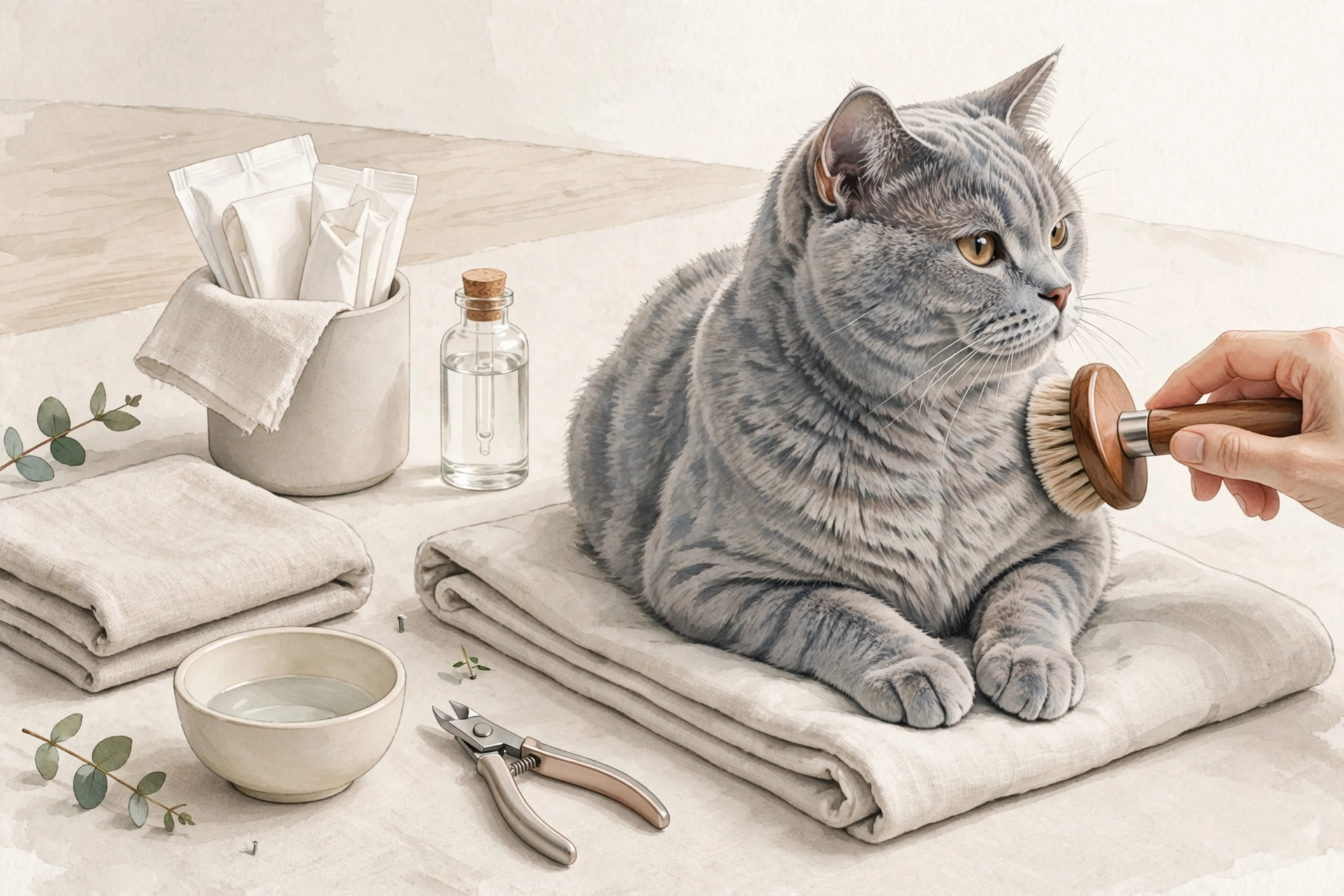
1 Brushing Is the Foundation of Good Cat Grooming
Brushing is the single most important grooming task you can do for your cat. It removes loose fur, prevents matting, and reduces the number of hairballs your cat swallows. How often you brush depends on coat type. Short-haired cats do well with a weekly brush, while long-haired breeds like Maine Coons or Persians may need daily attention.
Use a slicker brush or deshedding tool for most coat types. For sensitive cats, a rubber grooming glove can feel less intimidating and actually works surprisingly well on short coats. Always brush in the direction of fur growth to avoid pulling and causing discomfort.
Start with short sessions and plenty of treats. If your cat is new to brushing, a minute or two is plenty at first. Build up gradually. Most cats grow to enjoy it once they associate it with positive things.
Shop Cat Brushes and Grooming Tools on Amazon →2 Managing Shedding Year-Round
All cats shed to some degree, even those advertised as low-shedding. Shedding increases during seasonal transitions in spring and fall, when cats lose their winter or summer coats. During these periods, brushing more frequently makes a big difference in how much fur ends up on your furniture and clothes.
A deshedding tool removes the soft undercoat that causes most of the fur you find around the house. Done regularly, it can cut shedding dramatically. Combine consistent brushing with a high-protein, omega-3-rich diet to support coat health and reduce excessive shedding from the inside out.
3 Trimming Your Cat's Nails
Nail trimming sounds scarier than it is. Most cats need their nails trimmed every two to three weeks. Overgrown nails can curl into the paw pad, which is painful and can lead to infection.
Use cat-specific nail clippers, not human ones. The angle and blade design are different. Clip only the clear tip of the nail, staying well clear of the pink "quick," which is the blood vessel inside. If you clip the quick, it bleeds and stings, and your cat will remember that experience.
If your cat resists, try wrapping them in a towel to keep them still. Trim one paw at a time and reward with a treat after each one. Over time, most cats settle into the routine.
4 Cleaning Your Cat's Ears
Healthy cat ears should look clean and pale pink inside, with minimal odor. A small amount of light brown wax is normal. Dark brown or black debris, excessive wax, or a strong smell can signal an ear infection or ear mites and warrants a vet visit before you attempt any cleaning.
To clean ears at home, use a cotton ball or soft pad dampened with a vet-approved ear cleaner. Gently wipe the inner flap and the visible part of the ear canal. Never insert anything into the ear canal itself. Check both ears once a month or whenever you notice buildup.
5 Caring for the Eye Area
Cats can develop discharge in the corners of their eyes, especially flat-faced breeds like Persians or Scottish Folds. A little clear or light-colored discharge is usually normal. Dark, crusty buildup needs to be gently removed before it causes irritation.
Use a soft, damp cloth or cotton pad and wipe from the inner corner of the eye outward. Use a separate pad for each eye to avoid spreading bacteria. If you notice redness, swelling, or thick colored discharge, that is a sign to see your vet rather than treat it at home.
6 Bathing a Cat: Yes, It Is Possible
Most cats do not need regular baths. Their self-grooming habits are thorough and effective for day-to-day coat maintenance. However, there are situations where a bath becomes necessary: a particularly dirty coat, something sticky or toxic on the fur, or a skin condition that requires medicated shampoo.
When bathing is needed, use lukewarm water and a cat-specific shampoo. Never use human shampoo or dish soap, as these strip the natural oils from the coat. Wet the fur thoroughly, apply shampoo gently working from neck to tail, and rinse completely. Wrap your cat in a warm towel immediately after and keep them in a warm room until fully dry.
Have everything ready before you start, speak calmly throughout, and work quickly. Many cats tolerate a bath better than their owners expect, especially when handled with confidence and minimal fuss.
7 Dental Care: The Most Overlooked Part of Grooming
Dental disease is one of the most common health problems in cats, and most owners have no idea it is happening until it is advanced. By age three, the majority of cats show some signs of gum disease. Left untreated, it can lead to tooth loss and has been linked to kidney and heart problems.
Brushing your cat's teeth daily is ideal. Even three times a week makes a meaningful difference. Use a cat-specific toothpaste, never human toothpaste, which contains xylitol and is toxic to cats. Start by letting your cat lick the toothpaste off your finger, then gradually introduce a soft finger brush to their gums over several sessions.
If brushing is simply not possible with your cat, dental treats, water additives, and dental toys can help slow tartar buildup as a secondary option, though none replace brushing completely.
8 Choosing the Right Grooming Tools
Having the right tools makes every grooming session faster and less stressful. A basic home grooming kit should cover the essentials: a slicker brush or deshedding comb, nail clippers designed for cats, a vet-approved ear cleaner with cotton pads, a soft toothbrush and cat toothpaste, and cat-specific shampoo for occasional baths.
You do not need to spend a fortune. A few quality tools that you actually use consistently will do far more good than a drawer full of gadgets you never reach for. Buy for your cat's coat type and start simple.
Find Quality Cat Grooming Kits on Amazon →9 Start Grooming Kittens Early
The single best grooming decision you can make is to start early. A kitten introduced to brushing, nail trims, and ear checks before six months old grows into a cat that tolerates these tasks far better as an adult. At this age, make every session short and positive. Use treats, praise, and stop before any resistance builds up.
Even if your kitten does not technically need much grooming yet, going through the motions regularly teaches them that being handled is safe and normal. This investment pays off enormously later, especially during vet visits.
10 When to See a Professional Groomer
Some cats, particularly long-haired breeds or cats that have developed severe matting, benefit from a professional groomer. A professional can clip matted fur safely, give a thorough bath and blow-dry, and handle nails for cats that make home trimming genuinely difficult.
If your cat has developed severe mats, do not try to cut them out yourself. Skin can be much closer to the mat than it appears, and cuts happen easily. A groomer or veterinarian can handle this safely, sometimes under light sedation if the cat is very stressed.
Frequently Asked Questions About Cat Grooming
How often should I groom my cat?
Short-haired cats need brushing once or twice a week. Long-haired breeds may need daily brushing to prevent matting. Nails should be trimmed every two to three weeks. Ears can be checked and cleaned monthly, and dental care should happen as often as possible, ideally daily or at minimum three times a week.
My cat hates being groomed. What do I do?
Start slow and pair every grooming session with treats and praise. Keep early sessions to just one or two minutes. Try grooming when your cat is relaxed or sleepy after a meal. If your cat becomes truly distressed, stop and try again another day. Forcing it almost always makes the aversion worse over time.
Can I use baby wipes to clean my cat?
No. Most baby wipes contain ingredients that are not safe for cats, including propylene glycol and added fragrances. Use unscented, cat-specific grooming wipes or simply a damp soft cloth instead. When in doubt, check with your vet before using any human product on your cat.